Buying in Roseland is not just about finding a home you like. It is about choosing the kind of ownership that fits your budget, time, and comfort level with maintenance. If you are weighing a condo, townhome, or house, the right answer depends on how you want to live and what you want your monthly costs to look like. This guide will help you compare each option in Roseland and focus on the questions that matter most. Let’s dive in.
Roseland housing at a glance
Roseland is a market where detached homes lead the housing mix, but attached options are still a real part of the conversation. A borough housing-plan draft based on 2023 ACS data reports 2,470 housing units, with 59.1% 1-unit detached, 25.6% 1-unit attached, and 10.9% 5-plus-unit multifamily.
That means you will likely see more houses than condos or townhome-style properties, but you still have meaningful choices across all three categories. Roseland also has a strongly owner-occupied profile, with an owner-occupied housing unit rate of 82.3%, according to Census QuickFacts.
Price is another reason to compare carefully. Census QuickFacts lists a median owner-occupied home value of $665,700, and the borough housing-plan draft shows that 72.5% of owner-occupied homes fall between $500,000 and $999,999.
Why property type matters in Roseland
In Roseland, the choice between a condo, townhome, and house affects more than layout. It changes your maintenance responsibilities, your monthly carrying costs, your privacy, and how much control you have over repairs and updates.
It also matters because Roseland has an older housing stock. The borough housing-plan draft shows that 42.6% of housing was built before 1970, which makes the condition of roofs, siding, windows, and major systems especially important when you compare a detached home with a lower-maintenance attached option.
Condo: the low-maintenance option
A condo is an individual unit within a larger building or community. You own your unit, but shared elements are typically managed through an association or board.
For many buyers, the biggest draw is convenience. Condo ownership often means less day-to-day responsibility for exterior repairs, common areas, and shared upkeep.
That convenience usually comes with a monthly condo fee. Fannie Mae notes that these fees often cover exterior maintenance, common areas, reserves, and sometimes certain utilities or amenities, but they are typically separate from your mortgage payment.
The main tradeoff is control. Association rules may affect renovations, pet policies, use of common spaces, and the timing of repairs. Financing can also be more complicated if a lender has concerns about the community’s reserves, insurance, physical condition, or pending legal issues.
When a condo may make sense
A condo may be a strong fit if you want:
- Lower exterior maintenance
- A more predictable shared-services model
- Potentially lower insurance costs than a detached house
- A simpler ownership experience
Condo questions to ask
Before you move forward on a Roseland condo, ask:
- What does the monthly fee cover?
- How much is in the association’s reserves?
- Are any special assessments planned or under discussion?
- Are there insurance or legal issues that could affect financing?
Townhome: the middle-ground choice
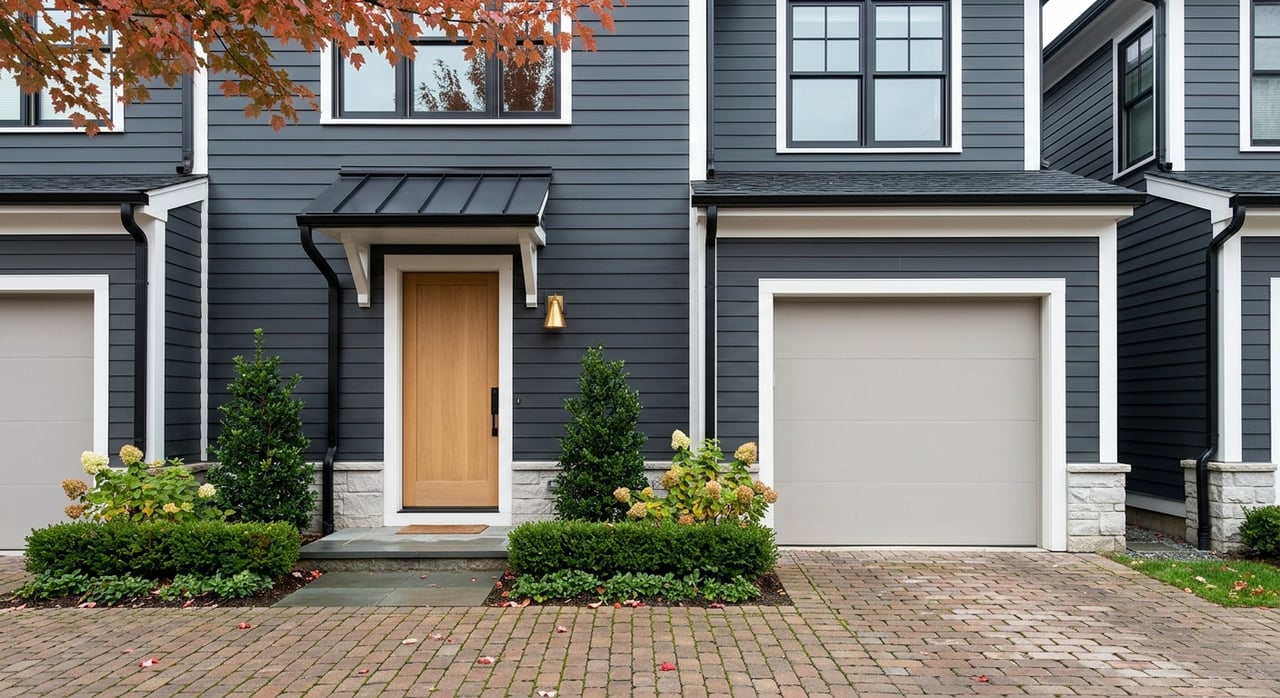
A townhome often gives you a blend of private living and shared structure. These homes are usually multi-floor units that share one or two walls with another property, often with a private entrance and some outdoor space like a patio or deck.
In Roseland, townhome-style living is relevant because 25.6% of the borough’s housing units are classified as 1-unit attached. While that category is broader than townhomes alone, it does show that attached housing is a meaningful part of the local market.
Townhomes often appeal to buyers who want more space and separation than a condo, but less exterior upkeep than a detached house. Fannie Mae notes that townhomes are often less expensive than a similarly sized single-family home because they are built up instead of out.
That said, townhomes are not always fee-free or maintenance-free. Some are part of an HOA or condo-style structure, so you still need to understand dues, rules, and which repairs are shared versus your responsibility.
When a townhome may make sense
A townhome may be a good fit if you want:
- More living space than many condos offer
- A private entrance
- Some outdoor space without a full yard to maintain
- A balance between privacy and shared upkeep
Townhome questions to ask
When comparing townhomes in Roseland, ask:
- Is there an HOA or condo association?
- What do the dues cover?
- What maintenance is shared and what is your responsibility?
- How much privacy and outdoor space does the property actually provide?
House: the highest-control option
A detached single-family house offers the most independence. You are not sharing walls, and you generally have the greatest control over the home, lot, repairs, and improvements.
That level of control is one reason detached homes remain the dominant housing type in Roseland. With 59.1% of the housing stock in 1-unit detached homes, houses are the clearest reflection of the borough’s overall housing profile.
The tradeoff is responsibility. With a house, you are usually taking on the full stack of maintenance costs, including exterior repairs, landscaping, major systems, and long-term replacement planning.
In Roseland, that matters even more because a significant share of homes were built before 1970. If you are comparing a house with a condo or townhome, it is smart to look closely at age, condition, and likely near-term repair needs.
When a house may make sense
A detached house may be the best fit if you want:
- The most privacy
- More control over renovations and upkeep
- A standalone lot
- Fewer shared rules or common-area decisions
House questions to ask
Before choosing a house in Roseland, ask:
- What exterior systems may need attention soon?
- How old are key components like roof, windows, and mechanical systems?
- What should you budget annually for maintenance?
- How does that maintenance budget compare with the dues and lower upkeep of an attached home?
Compare total monthly cost, not just price
This may be the most important takeaway for Roseland buyers. The purchase price alone does not tell you what a home will really cost each month.
A monthly housing payment often includes principal, interest, property taxes, homeowners insurance, possible mortgage insurance, and, in some communities, HOA or condo fees. Closing costs also typically run about 2% to 5% of the purchase price.
For condo and townhome buyers, dues can materially change affordability. The Consumer Financial Protection Bureau notes that HOA or condo dues can range from a few hundred dollars per month to more than $1,000.
That is why two homes with similar list prices can feel very different once you compare the full monthly picture. A lower-priced condo with high dues may cost more each month than a slightly higher-priced property with lower recurring fees.
Roseland taxes and carrying costs
Property taxes are an important part of the Roseland cost picture. The borough lists a 2025 property tax rate of 1.862 and a 2025 assessment ratio of 97.99.
Using the Census median home value of $665,700 with the borough’s posted tax rate and assessment ratio produces a rough annual property tax estimate of about $12,146 before exemptions or relief programs. That is only an estimate, but it shows why taxes should be part of your first-round budgeting, not an afterthought.
The Tax Assessor also notes an annual property tax deduction of up to $250 for qualifying seniors and disabled homeowners. If that may apply to you, it is worth factoring into your planning.
A simple way to choose
If you are stuck between options, start with your lifestyle and work backward. Think about how much maintenance you want to handle, how important privacy is to you, and whether you would rather pay dues for shared upkeep or manage more of the property yourself.
Here is a simple framework:
- Choose a condo if low maintenance is your top priority.
- Choose a townhome if you want a middle ground between convenience and space.
- Choose a house if privacy and control matter most to you.
Then pressure-test that choice against the full monthly cost. In Roseland, where many homes fall into the $500,000 to $999,999 range, taxes, insurance, maintenance, and dues can make a bigger difference than the list price suggests.
Final thoughts for Roseland buyers
There is no one-size-fits-all answer in Roseland. The best property type is the one that supports your finances, your day-to-day routine, and your long-term plans.
A condo can simplify ownership. A townhome can offer a practical middle path. A detached house can give you the most freedom, but also the most responsibility.
If you want help comparing specific Roseland listings side by side, the Stephanie Mallios Team can help you look beyond the headline price and make a confident decision based on how you actually want to live.
FAQs
What is the main difference between a condo, townhome, and house in Roseland?
- A condo is typically the lowest-maintenance option, a townhome is often the middle ground, and a detached house offers the most privacy and control with the most owner responsibility.
Are detached houses common in Roseland?
- Yes. A borough housing-plan draft based on 2023 ACS data reports that 59.1% of Roseland’s housing stock is 1-unit detached.
Do Roseland condos and townhomes usually have monthly fees?
- Many do. Buyers should ask what the fee covers, whether reserves are strong, and whether any special assessments or shared maintenance costs may affect ownership.
Why should Roseland buyers compare total monthly cost?
- Total monthly cost gives you a clearer picture because it may include mortgage costs, taxes, insurance, mortgage insurance, and any HOA or condo dues.
How important are property taxes when choosing a home in Roseland?
- Very important. Roseland’s posted 2025 tax rate and assessment ratio suggest that taxes can be a meaningful part of your annual carrying cost, so they should be included in your budget from the start.
Does the age of Roseland homes matter when choosing property type?
- Yes. With 42.6% of the housing stock built before 1970, buyers should pay close attention to maintenance needs, major systems, and exterior condition, especially when comparing houses with lower-maintenance attached options.