If you’re selling a luxury home in Montclair, a standard listing plan is rarely enough. In a town where price points, architecture, and buyer expectations can vary sharply from one area to another, the way your home is priced, presented, and promoted can shape both interest and outcome. This guide walks you through what strategic luxury marketing really looks like in Montclair and how the right approach can help your home stand out. Let’s dive in.
Why Montclair Luxury Homes Need a Different Strategy
Montclair is a competitive market, with recent public snapshots showing median sold prices around $1.4 million to $1.45 million and median days on market in the low 20s. At the same time, pricing inside town is not uniform. Neighborhood and ZIP-level data show meaningful variation, which is why luxury homes usually need to be evaluated within a narrower submarket rather than against town-wide averages.
That matters because buyers at the upper end are often not comparing your home to every listing in Montclair. They are comparing it to homes with a similar location, architectural style, lot setting, renovation quality, and overall lifestyle appeal. In other words, your home’s real competition may be much more specific than the broad market headlines suggest.
Montclair’s Architecture Shapes Buyer Perception
One of Montclair’s biggest strengths is its architectural variety. The township identifies four locally landmarked historic districts: Town Center, Upper Montclair, Pine Street, and Watchung Plaza. Across those districts, you’ll find a range of styles including Renaissance Revival, Italianate, Classical Revival, Bungalow-Craftsman, Colonial Revival, Queen Anne, Neo-Classical, and Tudor Revival.
For a luxury seller, that variety creates opportunity. It means your home can be marketed not just by size or room count, but by design story, period detail, renovation approach, and condition. For architecturally notable homes, buyers often respond to the feeling and character of the property as much as the data on paper.
Commuter Access Still Adds Value
Montclair’s appeal is also tied to access. NJ Transit’s Montclair-Boonton Line serves Montclair-area stations including Bay Street, Upper Montclair, Watchung Avenue, Walnut Street, and Montclair Heights. That rail access continues to matter for many buyers who want a home with distinctive character while staying connected to the broader New York metro area.
For luxury marketing, that means the buyer story should be complete. You are not just selling finishes and square footage. You are also presenting a combination of architecture, location, and everyday convenience that aligns with how many buyers want to live.
Price by Submarket, Not by Average
Why broad averages can mislead
A town-wide median can offer useful context, but it should not drive pricing for a premium home. In Montclair, public snapshots show wide price spreads across neighborhoods and ZIP codes. A luxury listing in one part of town may compete in a very different price band from a similarly sized home elsewhere.
That is why smart pricing at the high end starts with like-for-like comparisons. Recent closed sales matter, but so do under-contract and active listings that shape current competition and buyer expectations.
What a strong luxury pricing analysis should include
For any home, pricing should reflect factors such as size, location, amenities, condition, current market conditions, nearby developments, and buyer preferences. In Montclair’s luxury segment, that usually means looking closely at:
- Architectural style
- Historic district status, if applicable
- Lot size and setting
- Renovation level and design quality
- Outdoor living features
- Overall condition and move-in readiness
A pricing strategy should also match your goals. If timing matters, that may affect the launch price and the pace of adjustments. If maximizing net proceeds is the priority, the analysis needs to be especially disciplined from day one.
Net Proceeds Matter in New Jersey Luxury Sales
In New Jersey, sellers pay the Realty Transfer Fee. For transfers over $1 million, the state also imposes an additional graduated fee that rises from 1% of consideration over $1 million up to 3.5% over $3.5 million.
At the luxury level, those costs make pricing even more important. A thoughtful strategy is not only about attracting attention. It is also about understanding what you may actually net after state transfer costs and other sale-related expenses.
Presentation Is Part of the Pricing Strategy
Buyers judge luxury homes visually first
Today’s buyers do a large part of their evaluation online before they ever schedule a showing. Buyer research shows that the most valuable website content includes photos, detailed property information, floor plans, virtual tours, and videos.
That means your home’s first showing often happens on a screen. If the visual package feels incomplete, inconsistent, or generic, buyers may never take the next step.
What should be in the marketing package
A strategic luxury launch should usually include a polished set of core assets, such as:
- Professional photography
- Strong property video
- Detailed floor plans
- Clear, well-written property information
- Visual storytelling that highlights design, flow, and lifestyle
For a distinctive home, these materials should work together. The goal is to help buyers understand what makes the property special before they walk through the door.
Staging Should Support the Home’s Character
Staging can make a measurable difference. In NAR’s 2025 staging report, 83% of buyers’ agents said staging made it easier for buyers to visualize the property as a future home. The report also found that the living room, primary bedroom, and kitchen were the most important spaces to stage.
Sellers’ agents in that same report said staged homes can receive offers that are 1% to 5% higher than similar unstaged homes, with slight decreases in days on market. For a luxury listing, that can be meaningful.
In Montclair, editing often works better than over-styling
For architecturally significant homes, the goal is usually to edit rather than erase. Montclair’s period homes often have original proportions, millwork, materials, and details that should be supported, not covered up with a one-size-fits-all luxury look.
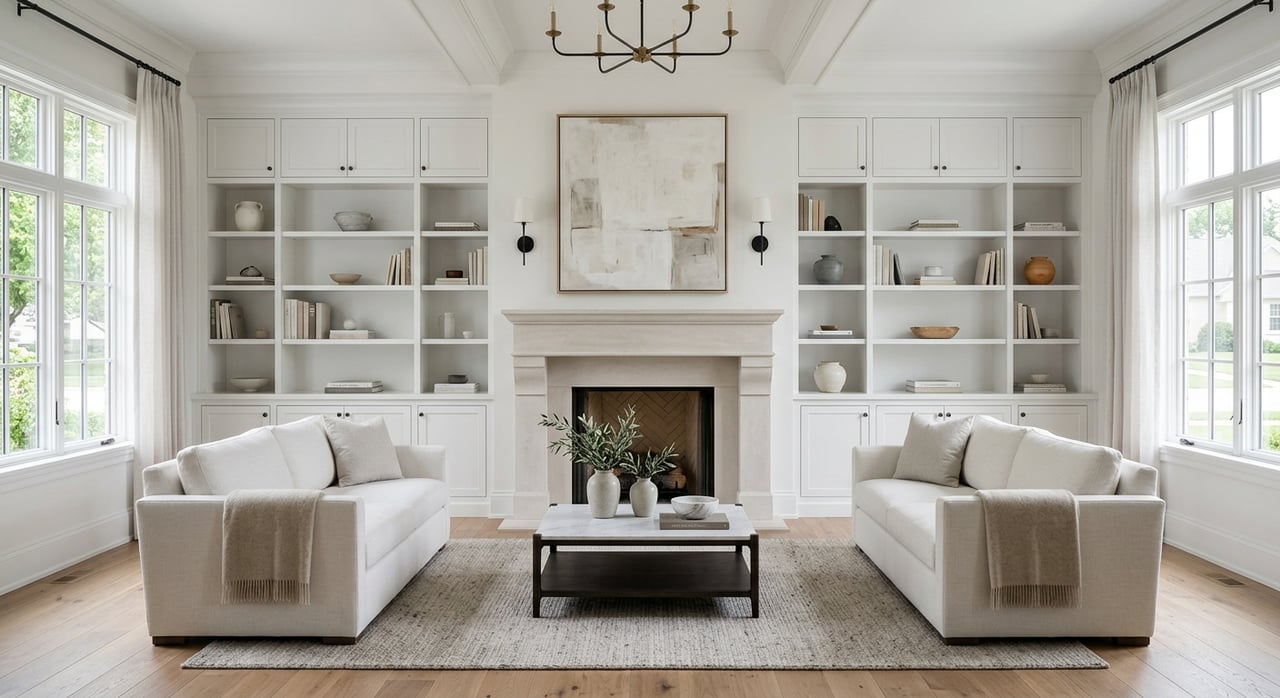
That is especially true in homes with strong historic character. Good staging should help buyers notice the home’s architecture, natural light, room flow, and craftsmanship. It should make the property feel elevated and welcoming while still feeling true to itself.
Historic District Details Can Affect Prep Work
If your home is in one of Montclair’s locally landmarked historic districts, certain exterior modifications may require a Certificate of Appropriateness through the township’s process. That does not mean preparation work is impossible, but it does mean planning matters.
Before making exterior changes ahead of listing, it is wise to coordinate carefully. The right pre-listing strategy should improve presentation without creating avoidable delays or confusion.
Distribution Should Match the Buyer
A luxury launch needs a clear message
Buyers often begin their search with a strong sense of what they want. Research cited in the report shows many already have ideas about where they want to live and what their ideal home looks like before they start.
That is why high-end marketing works best when the property story is clear from the start. Buyers should quickly understand the home’s architecture, renovation quality, outdoor space, condition, and location context.
Multi-channel exposure matters
A strong Montclair luxury listing is usually best served by a multi-channel launch. In practice, that often means combining:
- MLS exposure
- Polished email distribution
- Targeted digital assets tailored to likely buyers
- Press or editorial-style visibility when the home’s architecture or history supports it
This approach helps the property reach buyers in more than one way. It also gives the home a more refined and memorable market presence.
Why Press Visibility Can Help Certain Homes
For homes with notable architecture or historic provenance, editorial-style exposure can add real value to the story. It helps frame the property as more than a collection of rooms. It presents the home as a design-driven residence with a point of view.
That works especially well in a place like Montclair, where preservation, architectural detail, and neighborhood identity are part of the appeal. Press exposure should not replace standard listing channels, but it can strengthen them when it reinforces the home’s unique narrative.
The Right Agent Matters More at the Top End
In NAR’s 2024 seller data, 90% of sellers sold with the help of a real estate agent. Sellers also ranked marketing the home to potential buyers, pricing the home competitively, and selling within a specific timeframe among their top priorities.
In the luxury segment, those priorities become even more connected. Pricing affects perception. Presentation affects showing activity. Distribution affects the quality of buyer interest. That is why choosing the right representation is about much more than local name recognition.
What to ask when evaluating your options
If you are interviewing agents for a luxury sale in Montclair, focus on the areas that most affect results:
- How they define your home’s true submarket
- How they would price it against similar luxury competition
- What visual assets they recommend for launch
- Whether they can coordinate staging and pre-listing preparation
- How they would distribute the listing to reach likely buyers
- Whether they understand how to market architecturally significant homes
At the top of the market, small decisions can have an outsized impact. A thoughtful, tailored strategy often performs better than a generic plan with luxury language attached to it.
What Strategic Luxury Marketing Looks Like in Montclair
The strongest luxury marketing plans in Montclair usually share a few core traits. They treat the property as its own submarket, build the story around architecture and condition, invest in high-quality visuals, and distribute the listing in a way that matches the buyer profile.
That approach is especially important in a town with meaningful neighborhood-level price variation, recognized historic districts, and steady commuter appeal. When your home is distinctive, your marketing should be too.
If you’re preparing to sell a luxury or architecturally significant home in Montclair, the right strategy starts with understanding exactly what makes your property stand apart. The Stephanie Mallios Team brings boutique guidance, thoughtful marketing, and hands-on coordination to help you position your home with care and confidence.
FAQs
What makes luxury home marketing different in Montclair?
- Montclair has wide variation in pricing, architecture, and neighborhood character, so luxury homes usually need submarket pricing, stronger visual storytelling, and more tailored promotion than a standard listing.
How should a luxury home in Montclair be priced?
- A luxury home should be priced using recent comparable sales, active competition, and under-contract properties that closely match its location, style, condition, lot, and overall level of finish rather than broad town averages.
Do historic districts affect selling a home in Montclair?
- Yes. If a home is in one of Montclair’s locally landmarked historic districts, certain exterior changes may require township review, so pre-listing improvements should be planned carefully.
Is staging worth it for a luxury listing in Montclair?
- In many cases, yes. Research in the report shows staging helps buyers visualize the home and may contribute to stronger offers and slightly fewer days on market.
Why does commuter access matter when marketing a Montclair luxury home?
- NJ Transit service to Montclair-area stations remains part of the value story for buyers who want distinctive homes with access to the broader New York metro area.
What should sellers ask an agent about luxury marketing in Montclair?
- Ask how the agent would price the home within its true submarket, present its architectural strengths, coordinate staging or prep work, and distribute the listing to reach the most likely buyers.