On Thursday, October 22, the New Jersey Historical Commission will put up a plaque on the grounds of the Museum of Early Trades & Crafts at 9 Main Street. It marks events that started a short walk away. In 1964, Black patrons were refused haircuts at a barbershop on Main Street. Protests spread to seven Madison barbershops, and two years later the New Jersey Supreme Court held that a barbershop is a place of public accommodation.
The plaque joins the New Jersey Black Heritage Trail. A state list updated September 2, 2026 shows 19 trail markers installed statewide, and none of them is in Morris County. If the unveiling goes ahead as scheduled, Madison's Main Street will have the county's first installed marker on the trail. The case it records started downtown and ended up applying to every barbershop in the state.
A refusal on Main Street, then seven shops
The Madison Eagle's report on the marker says the protests began after three Black students were denied service at Philips Barber Shop on Main Street. Drew University students then organized demonstrations at seven barbershops in Madison, demanding that the barbers serve Black patrons.
The Eagle ties the student organizing to Dr. Martin Luther King Jr.'s "American Dream" speech at Drew that February, delivered to a crowd of more than 5,000. It reports that George D. Kelsey, a Drew professor of Christian ethics who had mentored King at Morehouse College, helped arrange the visit. The paper also quotes its own coverage from 1964:
"the best attended cultural event in this area's history"
That 1964 report noted that as many as 500 people were turned away for lack of space.
Hidden Figures of Madison, the local group helping organize the unveiling, tells the same story with one more name in it. Its site says the Civil Rights Action Committee organized protests and boycotts weeks after the King speech. The two accounts also give different dates for the speech. The Eagle says February 4, 1964, and Hidden Figures says February 5.
What the court record says
The legal case rests on a narrower set of facts than the protest story. According to the New Jersey Supreme Court's opinion, two borough residents, Thomas Peyton Sellers and Reginald Barrow, were refused haircuts at Philip Gatti's Philip's Barber Shop on April 23 and May 7, 1964. The newspaper's account of three students and the court's account of two named residents come from different sources. The marker covers both the protests and the case.
The case went through the state Division of Civil Rights before it reached the Supreme Court. The court found that the refusals were based on race. It held that a barbershop is a place of public accommodation and affirmed the Division's order. That order required Gatti to stop refusing service on the basis of race and to offer to cut Sellers' and Barrow's hair. The decision is dated February 21, 1966.
The Eagle adds two details about what the case has meant since. It describes the court as saying that a barbershop that refuses a haircut because it does not know how should seek relicensure. It also counts 14 later cases that have cited Sellers v. Philip's Barber Shop, the most recent in 2017.
How the marker got approved
The approval took several years and went through both the state and the borough:
- September 7, 2022. The law creating the New Jersey Black Heritage Trail is signed. The trail is a statewide set of markers along a connected route.
- April 2024. In the trail's first nomination round, the New Jersey Historical Commission approves 32 sites out of more than 60 submissions. "Madison Barber Shop Protests" is on that first list, under Morris County.
- June 11, 2025. The first trail marker is unveiled at the Franklin Street School in Cape May.
- September 8, 2025. Madison Borough Council certifies Resolution 241-2025, which Hidden Figures describes as granting permission for the installation at the museum.
- October 22, 2026. The plaque is unveiled at 9 Main Street.
The Commission's trail page counts 77 approved nominations, but its installed list, updated September 2, has 19. The nearest installed markers include the Montclair YWCA for Black Women and Girls at the Crane House, the Shady Rest Country Club in Scotch Plains, and Liberty Hall Museum in Union. Madison's site was in the first approval round in 2024, and its marker is going up two and a half years later.
The day goes from campus to Main Street
The program starts at Drew and finishes downtown. The Eagle and Hidden Figures give this schedule:
| Time | What | Where |
|---|---|---|
| 12 p.m. | Chapel | Craig Chapel, Seminary Hall, Drew University |
| 1 p.m. | Archive viewing: King's speech, the protests, the court case | Drew University |
| 1:30 p.m. | Symposium | Craig Chapel |
| 3:30 p.m. | Plaque ceremony | Museum of Early Trades & Crafts, 9 Main St. |
| After the ceremony | Reception | Museum annex |
The organizers are the Borough of Madison, Drew's Center on Religion, Culture & Conflict, and Hidden Figures of Madison. The listed end time depends on the source. Drew says noon to 4 p.m., while the museum and Hidden Figures say noon to 5 p.m. The event is free, but you have to register. The museum's event page lists the RSVP at $0, and the Eagle says registration is required.
Drew calls the plaque a "monument." The museum and Hidden Figures call it a plaque or trail marker.
The building the plaque stands beside
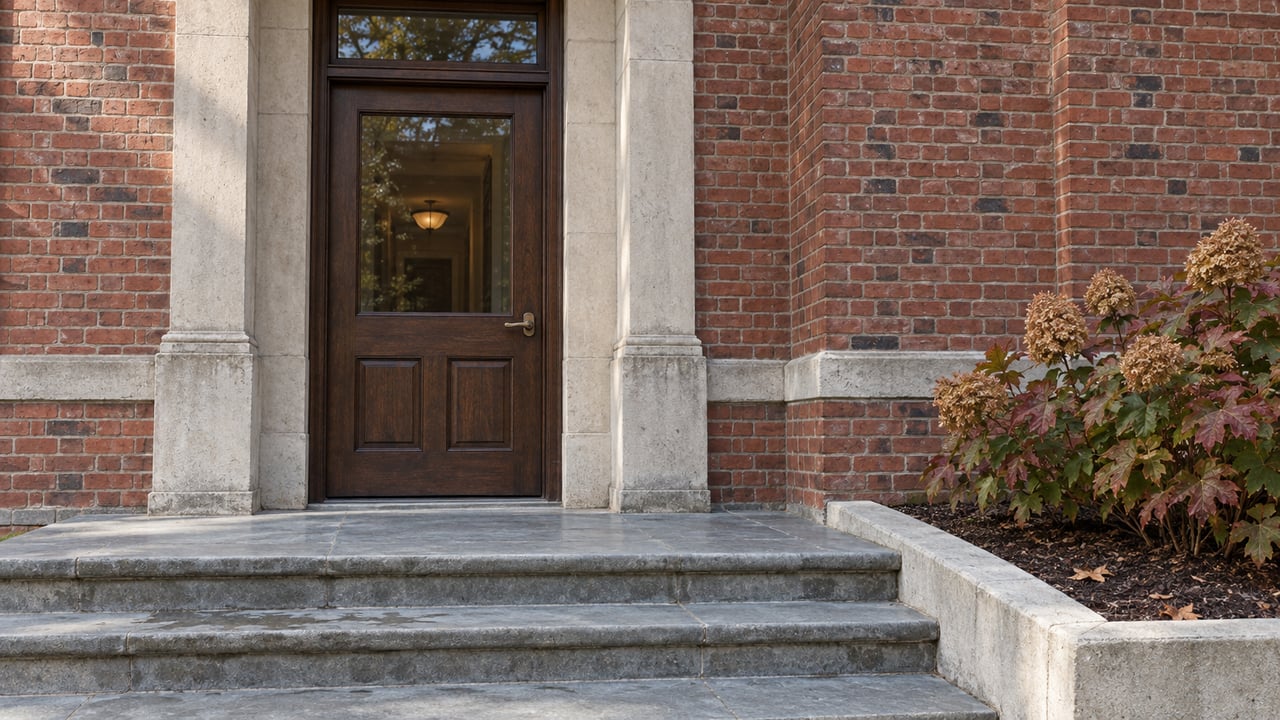
The marker will stand outside the former James Library. The museum says D. Willis James built it in 1899, it served as the town's first public library from 1900 to 1967, and the Museum of Early Trades & Crafts has been there since 1969.
The main-gallery exhibit, So You Say You Want a Revolution, runs May through December 2026 and shows how local communities supported the Continental Army through craftsmanship, trade, and resourcefulness. The window exhibit at the Education Annex, NJ Beacon Signals, runs through January 2027. Regular hours are 10 a.m. to 4 p.m. Tuesday through Saturday and noon to 5 p.m. on Sunday. The museum is closed Mondays. Its website gives two different admission policies. The Visit Us page lists set ticket prices, and the hours page says admission is by donation while construction work has part of the lower level closed. Check before you go.
Hidden Figures has been documenting Madison history since community conversations in summer 2020. Kenisha Tucker and Sharela Coon-Bonfield are its co-founders. The group's past work includes the 2024 "Crimson Rose" oral-history project with Drew professor Jonathan Golden. It also arranges walking tours for groups that contact it at [email protected].
The rest of that week downtown
The unveiling falls during a busy stretch on the downtown calendar:
- Through November 15: Hamlet at the F.M. Kirby Shakespeare Theatre. On October 22, the same day as the unveiling, the Shakespeare Theatre of New Jersey has a Know-the-Show program, and Hobnob & Hang follows on October 23.
- Wednesday, October 21, 8:30 to 9:30 a.m.: The Chamber's Coffee & Conversation at Davidovich Bagel Cafe, 23 Waverly Place.
- Saturday, October 24, 12:30 to 3 p.m.: The Chamber's Halloween Parade & Magic Show. The parade starts at 50 Kings Road and is followed by a magic show and trick-or-treating at downtown businesses.
- Saturdays through December 12, 9 a.m. to 2 p.m.: The Madison Farm & Artisan Market in the Prospect Street parking lot.
The plaque ceremony starts at 3:30 p.m. on Thursday, and the market is open Saturday morning, both at the downtown end of Main Street.
If you'd like to talk about the downtown blocks around 9 Main Street and what they mean for your plans, Stephanie Mallios Team would be glad to sit down with you. Schedule a personal market consultation.